
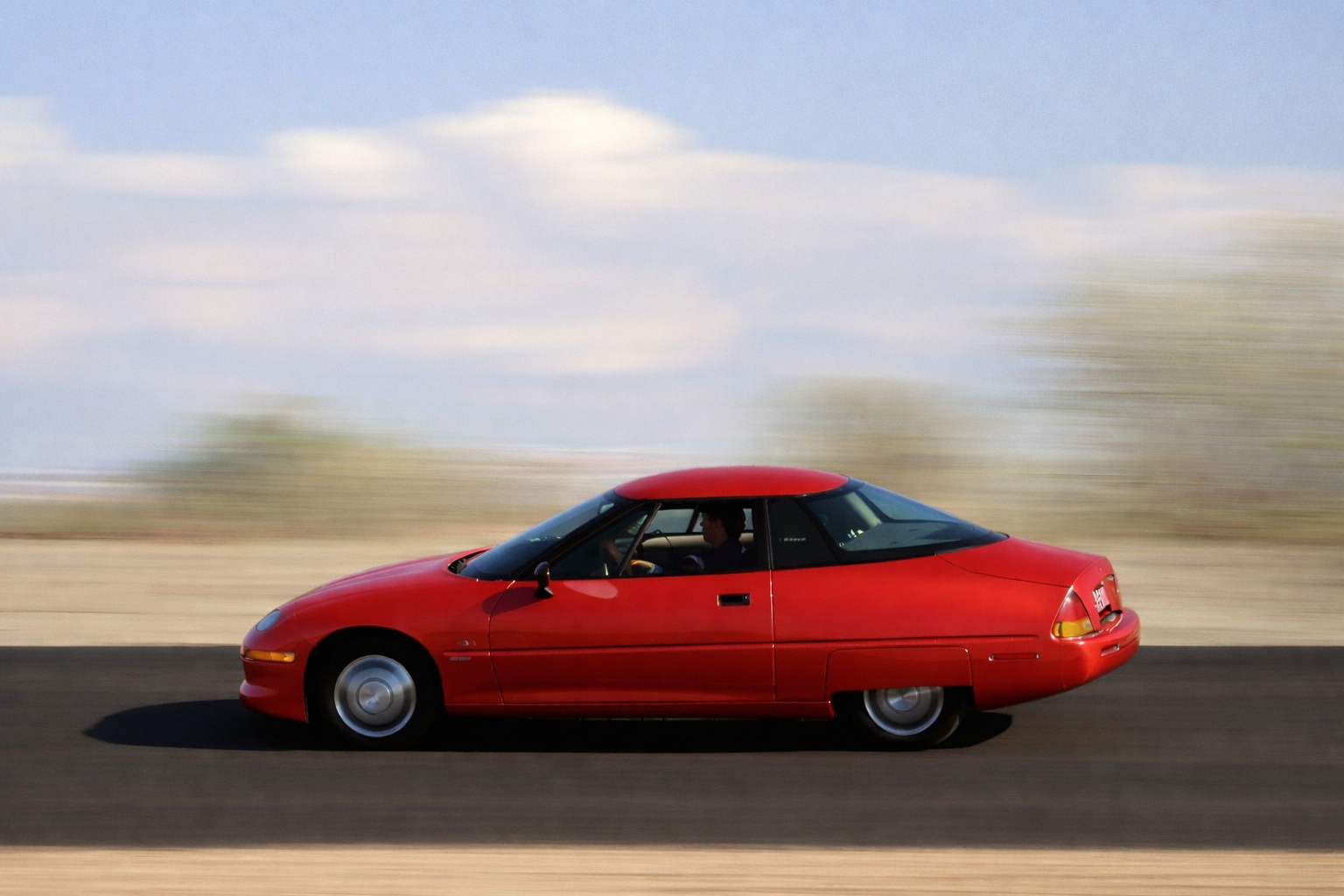
GM EV1 Electric Vehicle

The EV1 Archive

Explore the history, specifications, and legacy of the General Motors EV1.

Specifications

Technical specifications and performance details of the EV1.

Color
Battery
Battery capacity16.4 kWh / 53 Ah (312 V)
Battery pack weight1,310 lbs
Range40–60 miles per charge*
Energy consumption26 kWh / 100 mi (city & highway)
Battery capacity18.7 kWh / 60 Ah (312 V)
Battery pack weight1,310 lbs
Range60–80 miles per charge*
Energy consumption26 kWh / 100 mi (city & highway)
Battery capacity26.4 kWh / 85 Ah (343 V)
Battery pack weight1,147 lbs
Range80–120 miles per charge*
Energy consumption34 city / 30 highway kWh / 100 mi
Home Charger MagneCharger WM200 (240V 6.6 kW)
Paddle
Mounting
Convenience Charger MagneCharger (120V)
Mounts in trunk
Power102 kW (137 hp) @ 7,000 rpm
Motor torque150 Nm (110 lb‑ft) @ 0–7,000 rpm
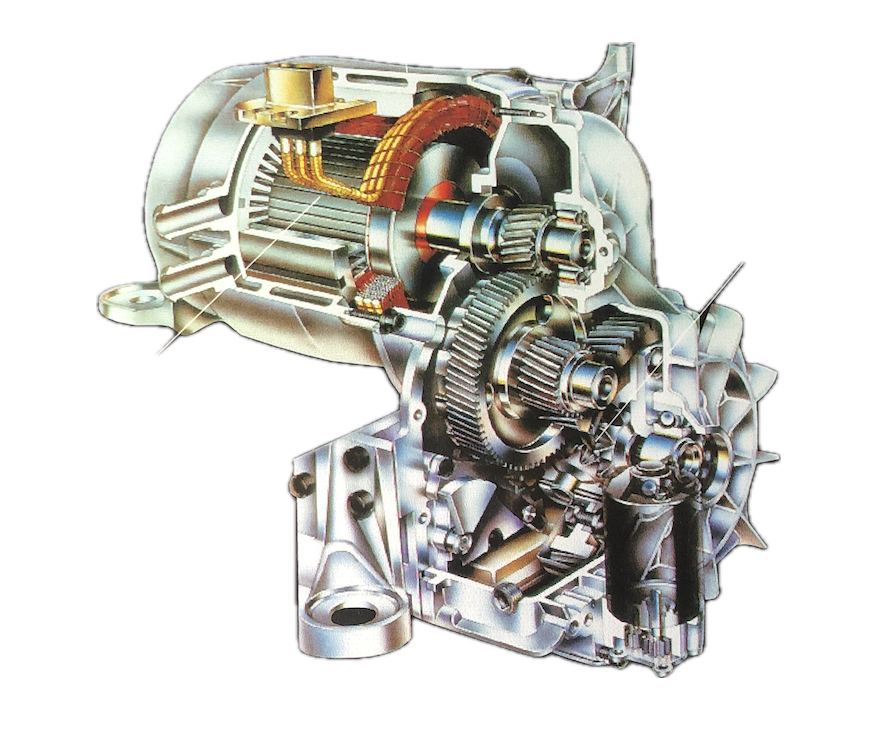
Motor / transaxleThree-phase AC induction; single-speed dual reduction, 10.946:1
BatteryAC Delco Lead Acid · 26 modules + 1 underhood
Top speed80 mph (129 km/h), electronically limited
0–60 mph< 9 seconds
60–0 braking160 ft (49 m)
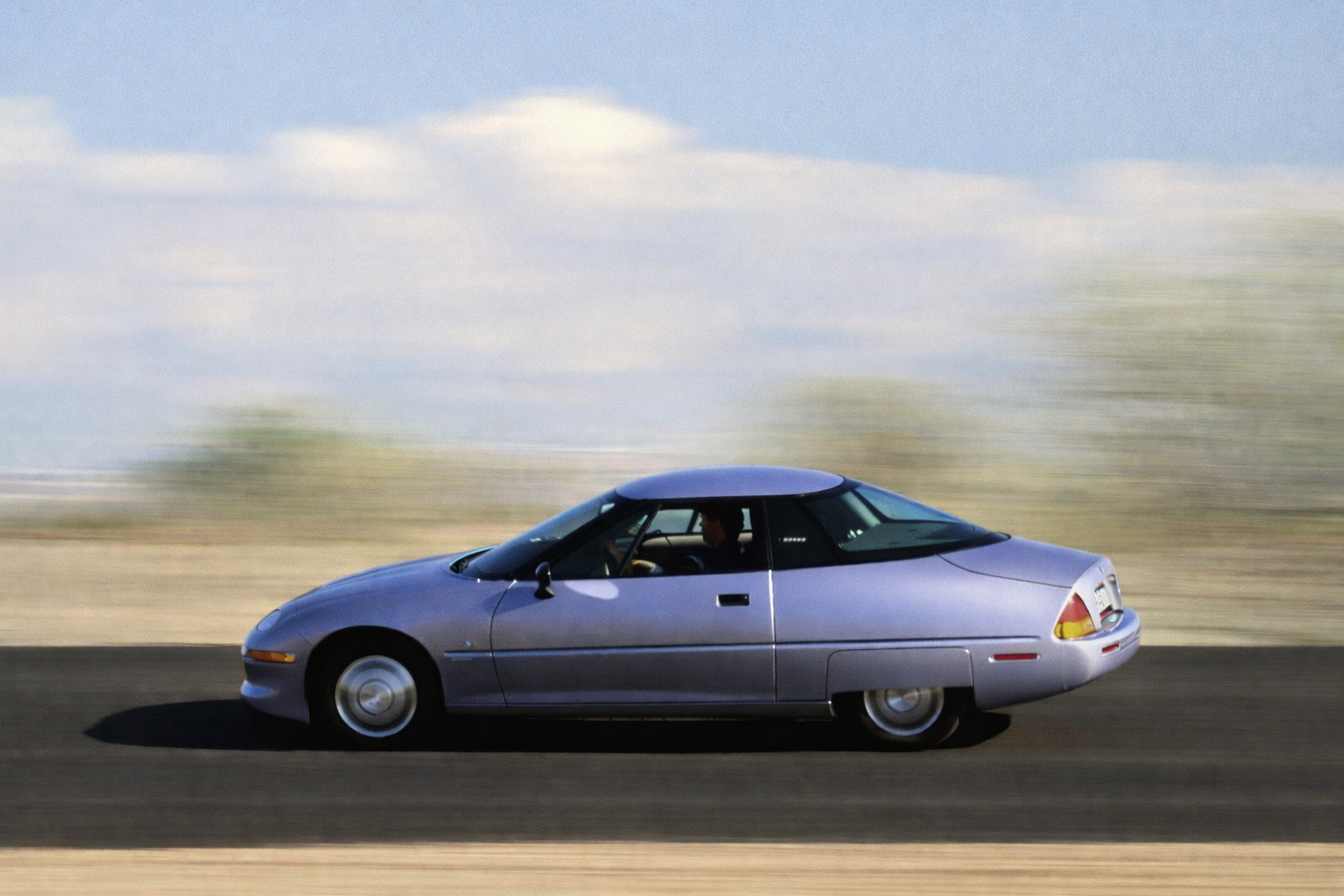
Drag coefficient0.19
Charging (220 V)5.5–6 hours · 6.6 kW
Charging (110 V)22–24 hours · 1.2 kW convenience
Power102 kW (137 hp) @ 7,000 rpm
Motor torque150 Nm (110 lb‑ft) @ 0–7,000 rpm
Motor / transaxleThree-phase AC induction; single-speed dual reduction, 10.946:1
BatteryPanasonic Lead Acid · 26 modules + 1 underhood
Top speed80 mph (129 km/h), electronically limited
0–60 mph< 9 seconds
60–0 braking160 ft (49 m)
Drag coefficient0.19
Charging (220 V)5.5–6 hours · 6.6 kW
Charging (110 V)22–24 hours · 1.2 kW convenience
Power102 kW (137 hp) @ 7,000 rpm
Motor torque150 Nm (110 lb‑ft) @ 0–7,000 rpm
Motor / transaxleThree-phase AC induction; single-speed dual reduction, 10.946:1
BatteryGM Ovonics NiMH · 26 modules + 1 underhood
Top speed80 mph (129 km/h), electronically limited
0–60 mph< 9 seconds
60–0 braking160 ft (49 m)
Drag coefficient0.19
Charging (220 V)6–8 hours · 6.6 kW

Propulsion & electronics

ConfigurationTransverse-mounted, front-wheel drive
Motor typeThree-phase AC induction, electric
Power inverterIGBT (insulated gate bipolar transistor)
Battery packs26 valve-regulated lead-acid or NiMH modules; 1 underhood accessory module
Chargers / charge portUL listed; indoor charging (see product marking)

Body & chassis

Layout2-passenger coupe
StructureAluminum alloy; welds, rivets, structural adhesive
Exterior panelsHood, doors, roof, trunklid: SMC. Fenders, quarters, rockers, skirts, bellypan: RRIM polyurethane. Dent- and corrosion-resistant; 100% recyclable.

Suspension

FrontAluminum short/long arm; coil over shock; stabilizer bar
RearMulti-link aluminum beam, Panhard rod; enhanced geometry for 1999

Steering

TypeElectro-hydraulic, power rack-and-pinion; speed-sensitive, variable-effort
Ratio16.5:1
Turning diameter32.5 ft (9.9 m)
Lock-to-lock3.0 turns

Braking

SystemElectro-hydraulic front, electric rear; blended regenerative + ABS
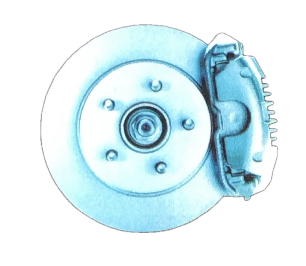
Front9.65 in (245 mm) solid discs; aluminum calipers
Rear8.9 in (225 mm) metal-matrix composite drums; electric actuation
Parking brakeElectric actuation via gear selector or push button

Wheels & tires

Wheels14 in aluminum alloy
TiresP175/65R14 Michelin® Proxima; all-season, self-sealing, puncture-resistant

Safety

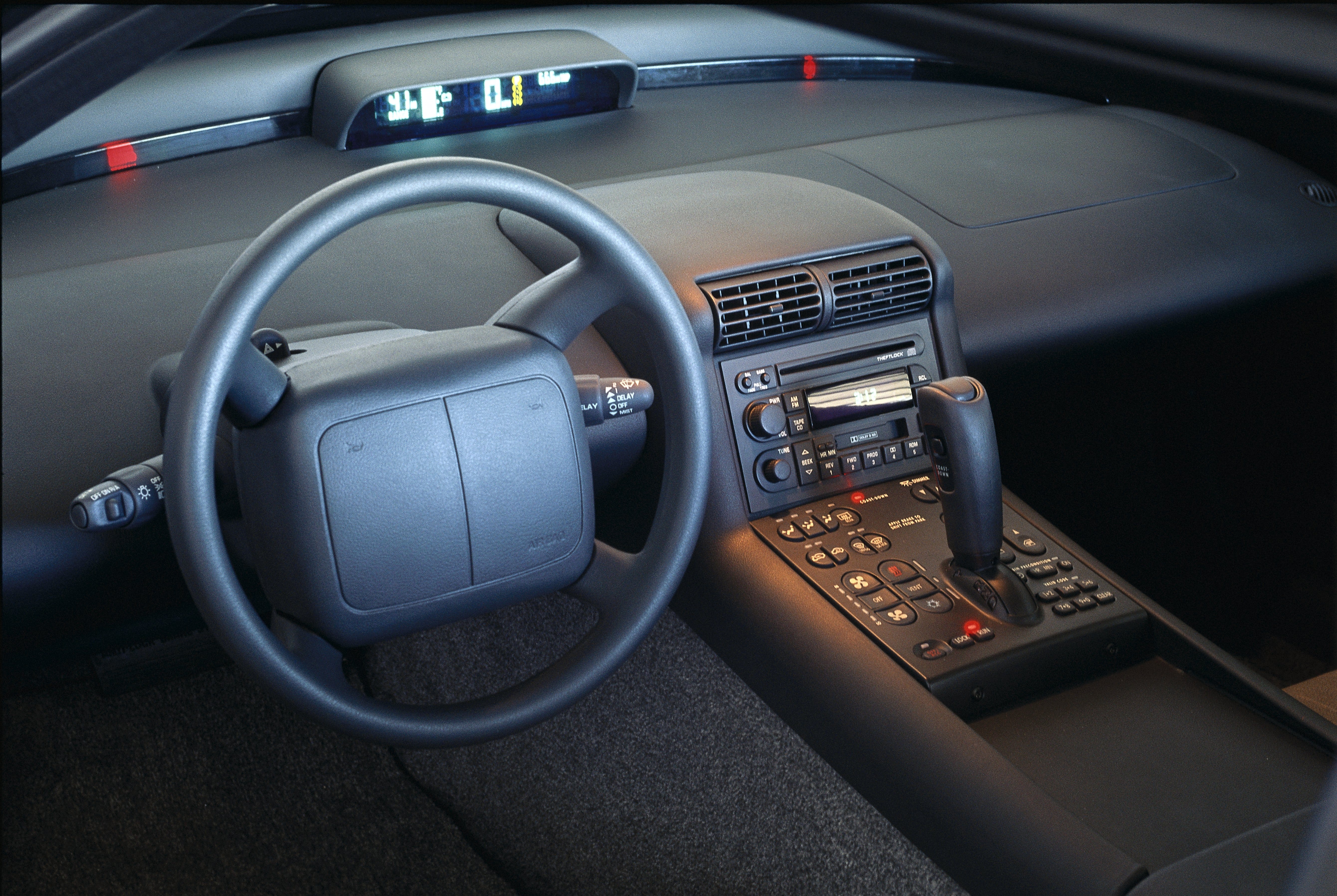
FeaturesABS; traction control; tire pressure monitoring; air bags; 3-point shoulder/lap belts; projector low-beam / reflector high-beam headlights; DRL; keypad entry with PIN; electric windshield & rear defoggers; solar reflective glass

Comfort & convenience

FeaturesPower windows, locks, mirrors; cruise with grade control; AM/FM cassette + CD, 4 speakers; heat-pump climate control, preconditioning, CFC-free A/C; VF instrumentation; delayed interior lights; intermittent wipers; remote hood/trunk; 4-way adjustable buckets; carpeted cabin & cargo, cargo net

* Range varies with driving style, terrain, temperature, accessories. Specs sourced from TZEV Beata Collection.

About the EV1

Original advertisements, promotional materials, and marketing campaigns.

Charging

INDUCTIVELY COUPLED
110-VOLT OR 220-VOLT
WALL OR FLOOR MOUNTED
EASY OPERATION
PROVEN SAFE
GROWING INFRASTRUCTURE
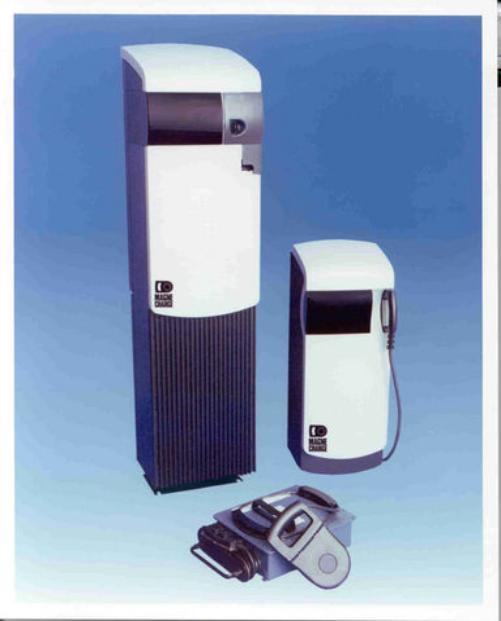
EV1 Gen 1 chargers — 240V MagneCharger and 120V convenience charger Charging in the rain — inductive charging is safe in wet conditions
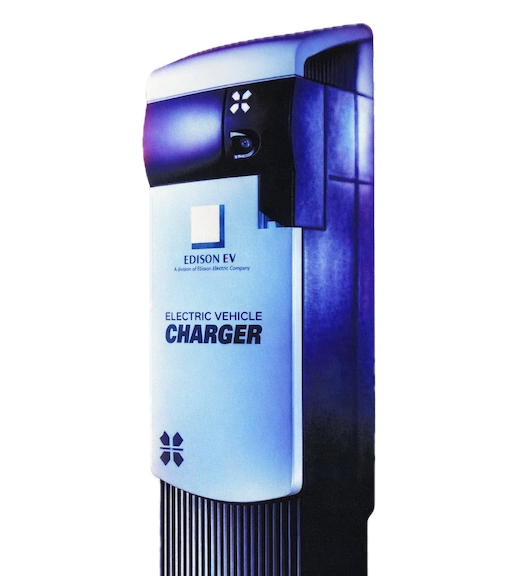
Edison EV Electric Vehicle Charger — wall or floor mounted, inductively coupled

The 220-volt charger (far left) can restore deeply discharged (85% depleted) batteries to full strength in about three hours. With the 110-volt portable charger (left front) mounted in the EV1's trunk, the charging process takes up to 15 hours.

Aerodynamics

RAINDROP SHAPE
0.19 DRAG COEFFICIENT
UNDERBODY PANEL SYSTEM
RECESSED WINDSHIELD WIPERS
HIDDEN ANTENNA
REAR WHEEL SKIRTS
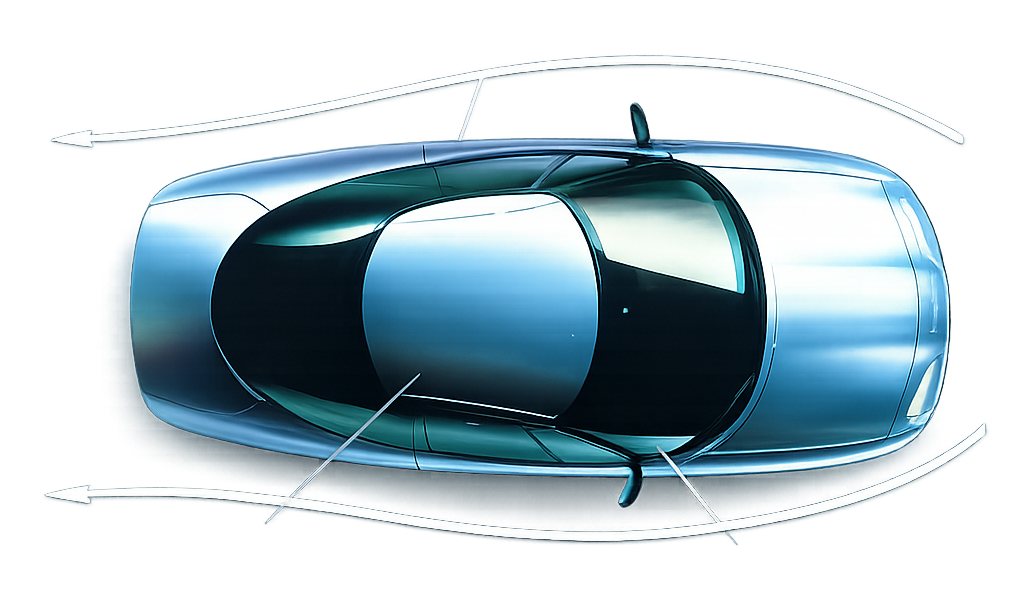
EV1 aerodynamics — raindrop shape, 0.19 drag coefficient

Unlike most cars, the EV1 has a smooth underside and a rear track that's nine inches narrower than the front. Both features help give the EV1 a drag coefficient of 0.19. 25% lower than any other production car. A foil antenna built into the underside of the roof replaces a typical radio antenna.

Body and Chassis

RIGID PLATFORM
LIGHTWEIGHT SUSPENSION
ELECTROHYDRAULIC STEERING
TIRE-PRESSURE MONITORING
REGENERATIVE BRAKING
BRAKE-BY-WIRE TECHNOLOGY
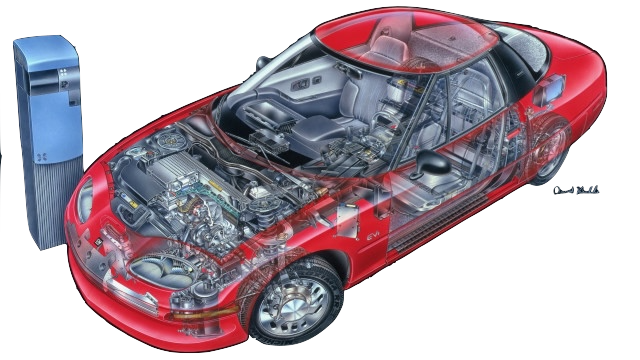
EV1 body and chassis — rigid platform, lightweight suspension, regenerative braking

Environment

ZERO-EMISSIONS VEHICLE
RECYCLABLE BATTERIES
RECYCLABLE STRUCTURE
RECYCLABLE BODY PANELS
EV1 — zero emissions, clean transportation

Battery Pack

LEAD-ACID BATTERIES
26 BATTERY MODULES
VALVE REGULATED
MAINTENANCE FREE
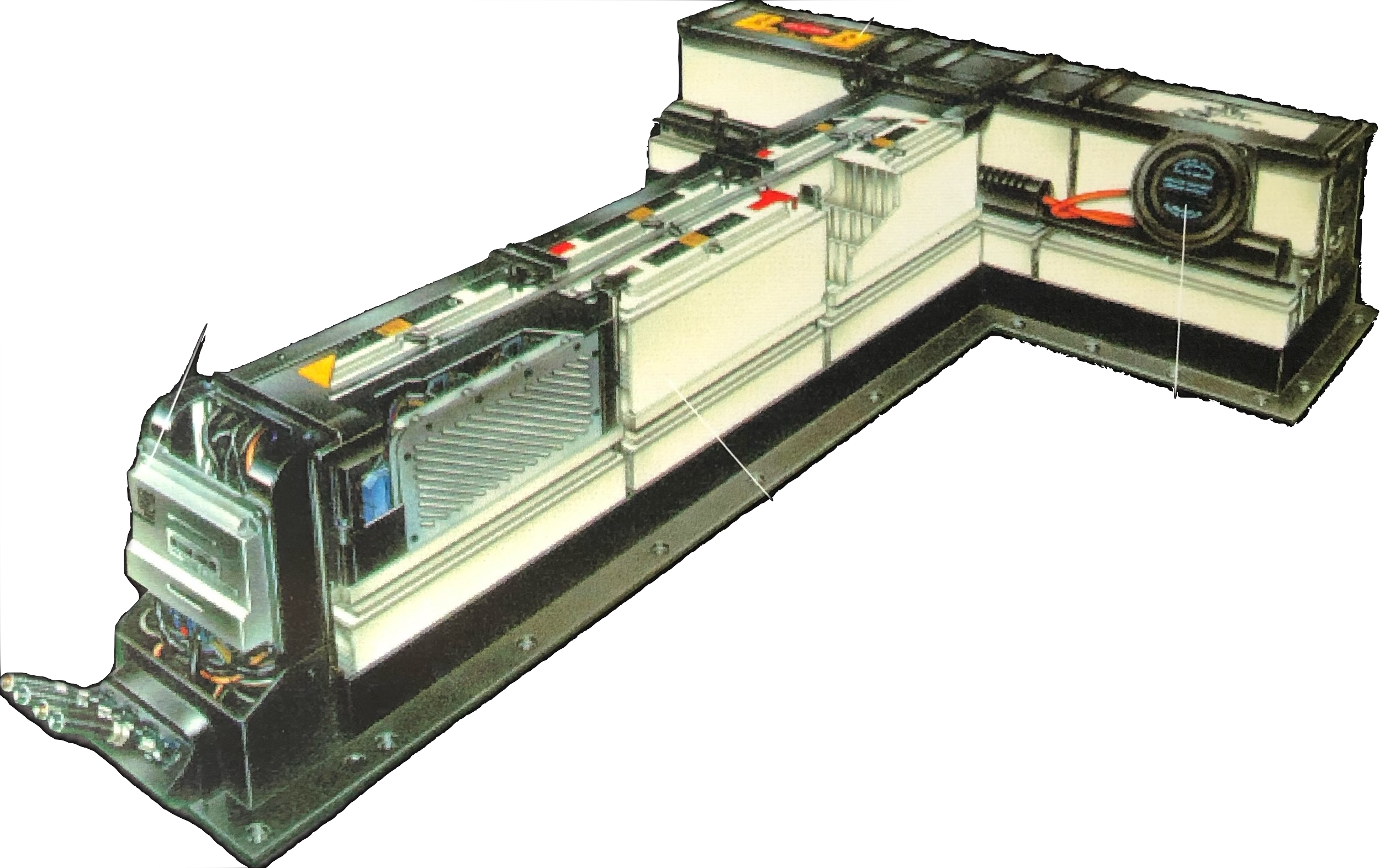
EV1 battery pack — lead-acid or NiMH modules

On the EV1, each 22 kilograms (48 pounds) equals a mile of city driving range. The result: the EV1 weighs just 2,970 pounds, with every last ounce carefully justified to be certain it contributes to a more efficient car.

The battery pack has 26 maintenance-free, valve-regulated, lead-acid modules (98% recyclable). Made from 100% recycled or reclaimed lead, the battery pack carries the energy equivalent of half a gallon of gasoline.

The battery pack controller is one of seven computers that communicate via a "party line" to monitor and control vehicle systems from interior temperature to battery pack state-of-charge.

The battery electrolyte is contained in absorbent fiberglass mats, densely layered between thin lead plates. The result is a more compact and lighter battery with virtually no potential for leakage.

Propulsion service battery disconnect.

Interior Features

AIR CONDITIONING
PREMIUM SOUND SYSTEM
CRUISE CONTROL
POWER WINDOWS/LOCKS
PRECONDITIONING
AUTOMATIC PARKING BRAKE
EV1 interior — climate control, power features, keypad entry

You don't need a key to get into the EV1 or to start it. Just enter your personal identification number.

EV1 keypad entry — personal identification number

Performance

183-MPH SPEED RECORD
AC INDUCTION MOTOR
0-30 IN UNDER 3 SEC.
DUAL REDUCTION GEAR DRIVE
EV1 performance — 137 hp, 0–60 under 9 seconds

Safety

ALUMINUM STRUCTURE
SIDE-IMPACT DOOR BEAMS
DUAL AIRBAGS
ABS/TRACTION CONTROL
EV1 safety — aluminum structure, side-impact door beams, dual airbags

EV1 engineers developed an aluminum structure where all elements are bonded together into a single rigid unit. It is the lightest, stiffest and simplest for any vehicle of its size in the world.

Intelligent software constantly monitors driving conditions, engaging traction control or anti-lock brakes to help avoid hazardous situations.

EV1 brakes — traction control, anti-lock braking

Dual airbags are standard. So are side-impact protection, daytime running lamps, crumple zones and a host of other safety features intended to give drivers peace of mind.

EV1 driver airbag EV1 passenger airbag

The EV1's chargers and charge port are listed by Underwriters Laboratories Inc. UL has helped generations of Americans learn how to use electricity and appliances safely.

Underwriters Laboratories Inc. listed

Theater

Documentaries, commercials, and video about the EV1. Explore the full video library.

Timeline

Key moments in the EV1's history from concept to cultural legacy.

1 / 0

In the News

Press coverage, articles, and media reports about the EV1 throughout its history.

Loading news articles...

VIN Registry

Registry of known EV1 vehicles by Vehicle Identification Number (VIN).

Vehicle Identification Number (VIN) Format

The EV1 uses a standardized 17-character Vehicle Identification Number that encodes specific information about each vehicle. Understanding the VIN structure helps identify model year, production details, and verify authenticity.

VIN Format Examples
1997 Model Year:
4G5PX225*VO200nnn
1999 Model Year:
4G5PX225*XO400nnn
VIN Structure Breakdown
Position 1 4 Country of Origin (United States)
Position 2 G Manufacturer (General Motors)
Position 3 5 Vehicle Type (Electric Vehicle)
Positions 4-5 PX Carline/Series (EV1)
Position 6 2 Body Style (Two-door)
Position 7 2 Restraint System (Active manual belts with driver & passenger frontal airbags)
Position 8 5 Engine Type (LN1, 102kW, 312V, Electric, GMEV, U.S.)
Position 9 * Check Digit (Security measure - not published)
Position 10 V / X Model Year (V = 1997, X = 1999)
Position 11 O Assembly Plant (Lansing, Michigan - originally Oldsmobile)
Position 12 2 / 4 Series Identifier (2 for 1997, 4 for 1999)
Positions 13-17 nnn Sequential Production Number
Additional Notes

Note: The check digit (position 9) is a calculated value used to verify VIN validity and prevent fraudulent VIN creation. For security purposes, this digit is not published in public registries.

The model year indicator follows a standardized sequence where letters and numbers represent specific years (e.g., 1980 = A, 1988 = J, 1993 = P, 1994 = R, 1997 = V, 1999 = X, 2000 = Y, 2001 = 1).

EV1 VIN Collection

Historical VIN registry compiled by Tom Dowling (Revised 8/15/1999)

GM EV1 Roster

Comprehensive registry of EV1 locations and ownership

Explore the original gmev.com

Browse an archived copy of the official GM EV1 website as it appeared in the late 1990s and early 2000s. The site includes specs, features, charging guides, news, and more from when the EV1 was in production.